The Ultimate Guide to Choosing Promotional Caps
Updated: Aug 8
A practical guide to choosing branded caps people genuinely want to wear.
Promotional caps have been around for a long time. That does not make them old-fashioned.
A good cap is one of the few promotional products that can become part of someone’s everyday life. It goes to work, to the shops, to weekend sport, on holidays and out in the sun. Every time it is worn, your brand goes with it.
But not every branded cap achieves that.
Some are worn once at an event, then disappear into a drawer. Others become someone’s favourite cap for years. The difference is rarely just the logo. It comes down to the decisions made before the order is placed: the style, fit, material, construction, decoration and, most importantly, whether the cap actually suits the people receiving it.
That is the thinking behind The Merch Matrix.
There is no single promotional cap that is perfect for every business, audience or campaign. There is only the cap that best aligns with your objectives.
This guide will help you make that decision with more confidence.
There is no perfect promotional product. There is only the product that best aligns with your project’s goals.
⸻
Why caps remain one of the most effective promotional products
A cap does something many promotional products cannot: it turns the person wearing it into a visible, voluntary representative of your brand.
Unlike a desk item that stays in one place, a cap moves through the world. It is worn at worksites, golf days, weekend sport, community events, cafés, beaches and airports. That creates genuine public exposure without the product feeling like advertising.
Caps have broad appeal. They work for staff uniforms, client gifts, sporting clubs, schools, trade businesses and events. They are practical in the Australian climate, and the branding can be as subtle or as bold as your brand needs.
The important point is this: people do not wear caps because a business put a logo on them. They wear caps they like.
Your job is to make sure yours is one of them.
[Further reading: Merch Matrix Legends — Premium Caps →]
⸻
Use The Merch Matrix before choosing a cap
Before opening a catalogue, ask what you are trying to achieve: staff uniforms, client appreciation, event awareness, team identity or a lifestyle campaign. The answer affects every decision that follows.
The eight Decision Drivers below are not a scoring system for declaring one cap universally better than another. They are a way to decide what matters most for your project.
1. Value
Value is not simply the lowest unit price.
A low-cost cap may be exactly right for a large event where broad reach is the goal. But if it loses its shape after a few wears, it may offer poor value for an employee uniform or client gift.
Think about value over the life of the product. How often will it be worn? How long is it likely to remain in use? What impression will it leave?
Sometimes a premium cap costs more upfront but delivers far better value because it is worn for years rather than one season.
[Further reading: Why Premium Caps Are Worth the Investment →]
2. Durability
A cap gets handled, packed, worn in the sun, thrown in the car and occasionally washed. Construction matters.
Look for quality fabrics, sturdy stitching, a comfortable sweatband, a closure that holds up, and front panels that keep their shape. The longer the cap remains wearable, the longer your brand remains visible.
Durability should match the role of the cap. A one-day event giveaway does not need the same construction as a cap for outdoor staff or a premium client program.
[Further reading: Why Quality Caps Last for Years →]
3. Perceived Value
Perceived value is how valuable the cap feels to the person receiving it. It is influenced by the fit, fabric, shape, branding method and finishing details.
A structured cap with clean embroidery or a quality patch can feel like retail headwear. A poorly fitted cap with an oversized print can feel like a giveaway, even if it cost more.
Perceived value matters most when you want the recipient to feel appreciated: staff recognition, client gifting, onboarding packs or premium events. It does not mean every cap needs to be expensive. It means the finished product should feel considered.
4. Brand Alignment
Your cap should look like it belongs to your business.
A formal corporate brand may suit a clean, structured cap with subtle embroidery. A craft brewery, automotive business or outdoor brand may be better represented by a trucker cap with a patch. A sun-safe community campaign may call for a bucket hat rather than a baseball cap.
The product, colour, decoration and overall style should reinforce your brand personality, not send a mixed message.
[Further reading: Structured vs Unstructured Caps: Which Style Suits Your Brand? →]
5. Usefulness
The most successful promotional products solve a real problem.
Caps provide shade, comfort and a practical extra layer for people working or spending time outdoors. That usefulness is why they are more likely to be kept than novelty items with no clear purpose.
For outdoor staff, sporting groups, schools, events and lifestyle audiences, usefulness can be the reason a cap keeps being worn long after the original campaign is forgotten.
[Further reading: Choosing the Right Cap for Outdoor Staff →]
6. Visibility
Caps are mobile branding. They are worn in public, at eye level, in places where people naturally interact with others.
Visibility is not just about making the logo as large as possible. A smaller, better-executed logo on a cap someone wears every weekend will often generate more meaningful exposure than a large logo on a cap they never choose to put on.
The goal is repeated wear. Visibility follows.
7. Distinctiveness
If every business at an event gives away the same cap with standard embroidery, it becomes harder for anyone to be remembered.
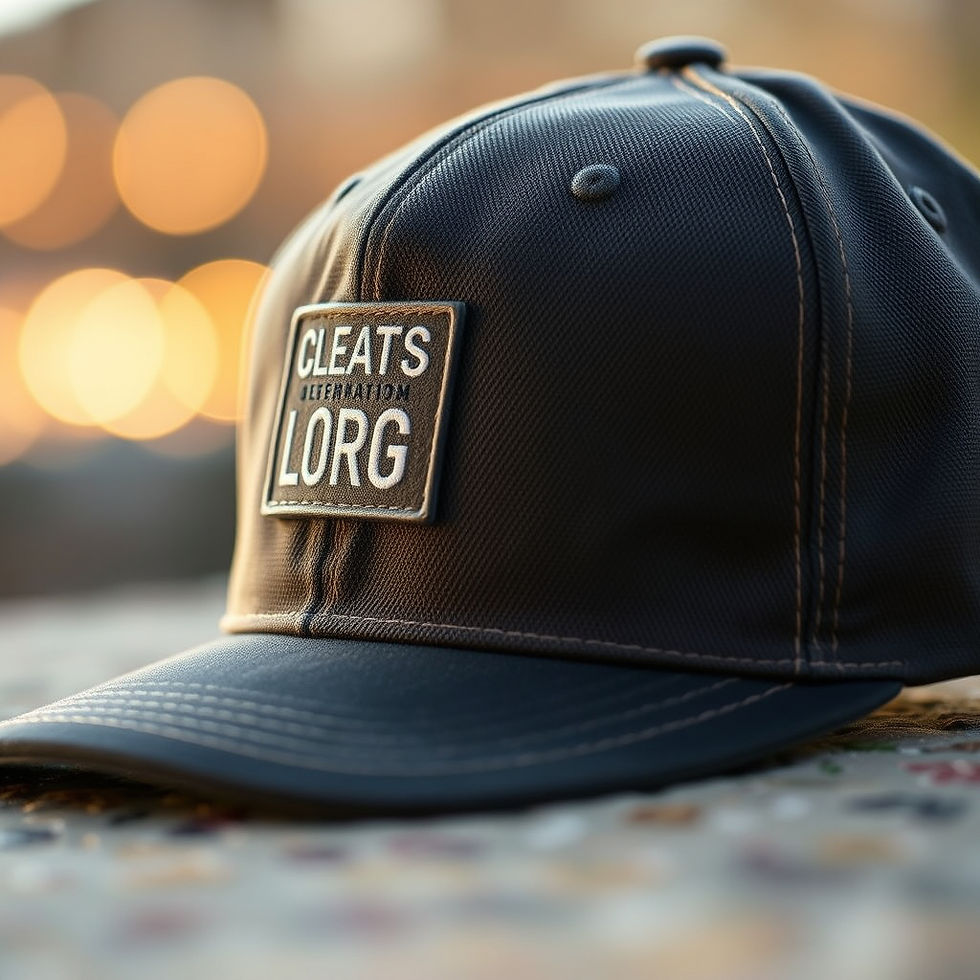
Distinctiveness can come from the cap itself, but it can also come from how it is branded. A woven patch, 3D embroidery, silicone badge, tonal logo, contrast stitching or thoughtful placement can turn a familiar product into something that feels different.
Being distinctive does not mean being loud. It means giving people a reason to look twice.
[Further reading: Beyond the Logo™ — Flat vs 3D Embroidery →]
8. Audience Fit
This is often the most important question: will your audience actually wear it?
The answer depends on their lifestyle, role, age group, personal style and the context in which they receive it. A flat-peak cap may suit a youth-focused event or streetwear-style brand. A curved peak may have broader appeal for trades, golf days and corporate events. A bucket hat can be ideal for outdoor campaigns, but less useful for a formal office audience.
Choose for the recipient, not for yourself.
[Further reading: Curved Peak vs Flat Peak: More Than Just Personal Preference →]
⸻
Choosing the right cap style
The right style depends on the job it needs to do.
Classic premium caps
Classic caps are the safest choice when you need broad appeal. They suit staff uniforms, corporate events, golf days and trade businesses, particularly when quality construction and clean embroidery are priorities.
Trucker caps
Trucker caps have a structured front and mesh back, giving them a casual look. They suit breweries, automotive businesses, trades, outdoor brands and lifestyle campaigns.
[Further reading: Category Specialists — Trucker Caps →]
Bucket hats
Bucket hats are outdoor specialists, with practical sun protection and strong alignment to sporting events, festivals, schools, tourism and summer campaigns.
[Further reading: Category Specialists — Bucket Hats →]
Performance caps
Lightweight, breathable and often moisture-wicking, performance caps suit field staff, sporting events, fitness programs and warm conditions.
⸻
Structured vs unstructured caps
This choice changes the personality of the cap.
A structured cap has support in the front panels, giving it a firm, defined shape. It feels polished, traditional and professional. It also provides a strong surface for embroidery and patches. Structured caps are popular with trade businesses, sporting clubs, corporate campaigns and staff uniforms.
An unstructured cap has a softer front with less reinforcement. It sits more naturally on the head and feels relaxed, casual and lifestyle-led. It can be a better fit for cafés, creative businesses, tourism, breweries and brands that want an everyday, less formal look.
Neither is better. The right cap is the one that looks natural on the people you want wearing it.
[Read more: Structured vs Unstructured Caps: Which Style Suits Your Brand? →]
Curved peak vs flat peak
Peak shape seems like a small choice, but it signals style.
A curved peak is familiar, versatile and broadly appealing. It suits general business, trades, golf, sporting organisations and classic promotional campaigns.
A flat peak makes more of a visual statement. It tends to suit youth-focused brands, music events, streetwear, automotive businesses, breweries and contemporary lifestyle campaigns.
Do not choose based only on what is fashionable. Choose the shape your audience is most likely to wear.
[Read more: Curved Peak vs Flat Peak: More Than Just Personal Preference →]
⸻
Fabric matters more than people think
Fabric affects comfort, durability and perceived value.
Brushed cotton suits classic caps, uniforms and broad promotional use.
Heavyweight cotton or canvas creates a more premium, durable feel.
Recycled polyester or RPET can support sustainability-focused messaging.
Performance fabrics suit active, outdoor or warm-weather settings.
Mesh panels improve ventilation and give trucker caps their casual character.
Match the material to the environment. Outdoor workers may need breathability and sweat management; premium client gifts may benefit from a heavier, refined finish.
⸻
Decoration can make or break the finished cap
Choosing the cap is only half the job. Decoration influences how the product feels, how your brand is perceived and whether it looks promotional or retail-quality.
Embroidery
Traditional embroidery is durable, textured and professional. Flat embroidery suits fine detail and smaller text; 3D embroidery adds depth to simple, strong logos.
DTF transfers
DTF transfers are useful for detailed, full-colour artwork, gradients and intricate logos that may not reproduce clearly in thread. They can deliver a clean, contemporary finish when matched to the right cap and artwork.
Patches
Patches offer texture, contrast and personality. Woven, leather-look, silicone, rubber and printed styles all create different impressions and can make a cap feel more like retail headwear.
[Further reading: Beyond the Logo™ — Embroidery vs DTF Transfers on Caps →]
[Further reading: Beyond the Logo™ — Why Patch Branding Has Become the Premium Choice for Branded Caps →]
⸻
Why big logos are not always better
It is natural to want your logo to be seen. But large branding does not automatically create a better outcome.
When a logo overwhelms the cap, the product can stop looking like apparel and start looking like advertising. That often makes it less likely to be worn.
Good branding is about balance. A smaller embroidered logo, tonal treatment, well-chosen patch or subtle side detail can feel more confident and more premium than a large front print.
Think about the cap without your logo. Would someone still like the style? Would they wear it on the weekend? If the answer is yes, your brand has a much better chance of getting the repeated exposure it wants.
⸻
Choosing caps for different campaigns
Staff uniforms and outdoor teams
Prioritise comfort, durability, sun protection and a professional look. Structured or performance caps with quality embroidery are strong options.
Trade businesses, sporting clubs and golf days
Focus on hard-wearing construction, fit and visibility. Curved-peak caps, trucker styles and premium embroidery or patches can all work, depending on the culture and environment.
Festivals, community events and fundraisers
Reach and visibility may be the priority. Bucket hats are excellent for sun-safe outdoor events, while classic caps can work for broad distribution.
Client gifts, youth and lifestyle campaigns
Prioritise audience fit and perceived value. A premium cap with refined branding may suit client gifting; trucker caps, flat peaks and bolder patches can work when they feel authentic to a younger or lifestyle audience.
⸻
Common mistakes when choosing promotional caps
Buying on price alone: Think about cost per wear, not just the unit price.
Choosing for yourself: Your audience may have different preferences; start with the people receiving it.
Using default decoration: Review the artwork and finished look before deciding on embroidery, DTF or a patch.
Making the logo too large: If the cap feels like a billboard, it may not be worn.
Ignoring the environment: Outdoor teams, golf days and premium client gifts all need different solutions.
⸻
Frequently asked questions
Should I choose embroidery or DTF for a branded cap?
Embroidery is a strong choice for a textured, durable and premium finish. DTF is often better for fine detail, full colour, gradients and complex artwork. The right choice depends on your logo and the impression you want to create.
Are trucker caps suitable for business use?
They can be excellent for the right business. They generally suit relaxed, outdoor, lifestyle, automotive, trade and hospitality brands more naturally than formal corporate environments.
Is a curved or flat peak better?
Neither is universally better. Curved peaks have broad, classic appeal. Flat peaks are more contemporary and can suit youth, lifestyle and streetwear-style campaigns. Let audience fit guide the decision.
Can a cap be sustainable?
Yes. Recycled materials, responsible sourcing and durable construction all help. A cap people use for years is usually the most sustainable choice.
⸻
Final thoughts
A great promotional cap is not simply a logo on a hat.
It is a product that fits the people receiving it, reflects the business behind it and earns a place in everyday life. When comfort, quality, style and decoration work together, people choose to wear it again and again.
That is where the real value sits.
Use The Merch Matrix to define what matters for your campaign before choosing a style. Is the priority broad visibility? Long-term staff wear? Sun protection? A premium client impression? A relaxed lifestyle look?
Once you know the objective, the right cap becomes much easier to find.
Merch Matrix Insight
The best promotional cap is not the one with the biggest logo or the lowest price. It is the one people keep reaching for long after your campaign has ended.
⸻
Have a question about your next project?
Whether you're choosing between products, branding methods or decoration options, we're happy to help.
Email: hello@custombranded.com.au
We read every enquiry personally.
Continue your Merch Matrix journey
Use this guide as a starting point, then explore the related articles to choose your cap style, decoration method and campaign approach with confidence.
[Merch Matrix Legends — Premium Caps →]
[Category Specialists — Bucket Hats →]
[Category Specialists — Trucker Caps →]
[Beyond the Logo — Flat vs 3D Embroidery →]
[Beyond the Logo — Embroidery vs DTF Transfers on Caps →]
[Beyond the Logo — Why Patch Branding Has Become the Premium Choice for Branded Caps →]


